
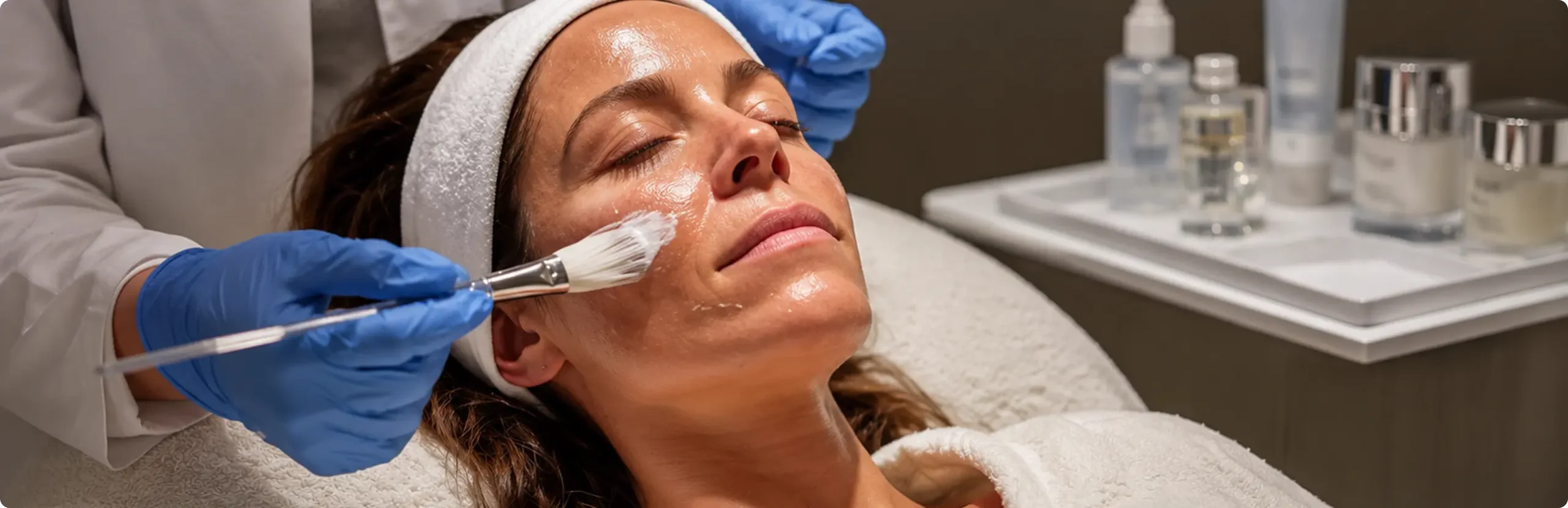
Healthy skin naturally renews itself by shedding older surface cells and replacing them with fresh, new ones. However, biological aging, active acne, hormonal changes, and environmental stressors can slow this natural process. As cellular turnover decreases, you may notice uneven skin tone, rough texture, stubborn dark spots, and fine lines.
Chemical peels are among the most established and effective non-surgical skin resurfacing treatments available. By promoting controlled exfoliation, they support your skin’s natural renewal process, revealing a smoother, brighter, and healthier-looking complexion.
According to clinical guidance from the American Academy of Dermatology (AAD), professional chemical peels can effectively treat acne, melasma, sun damage, and early signs of aging. Because every skin type is different, a personalized consultation is essential to determine the safest and most effective treatment plan for your individual needs.
Our Commitment to Safe, Realistic Results
Chemical peels can significantly improve your skin’s texture, clarity, and overall appearance. However, they are cosmetic treatments that require ongoing maintenance. They do not permanently stop the natural aging process or alter your skin’s genetic makeup, and complete clearance of every skin condition cannot be guaranteed.
How Chemical Peels Work with Your Skin
A professional chemical peel does not “burn off” the skin in an uncontrolled manner. Instead, carefully selected medical-grade acid solutions are applied under controlled clinical conditions to reach a specific depth of exfoliation.
These solutions temporarily alter the skin’s pH or coagulate surface proteins, breaking down the bonds that hold dead, damaged skin cells together. As these cells naturally shed, healthier new skin is revealed underneath.
The Three Types of Chemical Peels
1. Superficial (Light) Peels
- Target Skin Layer: Epidermis (the outermost layer of the skin).
- Common Active Ingredients: Alpha Hydroxy Acids (AHAs) such as Glycolic Acid, Lactic Acid, and Mandelic Acid, or Beta Hydroxy Acids (BHAs) such as Salicylic Acid.
- Best For: Mild acne, dull skin, uneven texture, and minor discoloration.
- Downtime: 0–3 days. Mild redness or dryness may occur, which is why these are often called “lunchtime peels.”
2. Medium-Depth Peels
- Target Skin Layer: Extends through the epidermis into the upper Papillary Dermis.
- Common Active Ingredients: Trichloroacetic Acid (TCA) (15%–35%) or Jessner’s Solution (Salicylic Acid + Lactic Acid + Resorcinol).
- Best For: Hyperpigmentation, moderate sun damage, fine lines, and superficial acne scars.
- Downtime: 7–14 days. Expect redness, skin tightness, and noticeable peeling during recovery.
3. Deep Peels
- Target Skin Layer: Reaches the mid-Reticular Dermis.
- Common Active Ingredients: High-strength Phenol (Carbolic Acid) or Croton Oil formulations.
- Best For: Deep wrinkles, severe sun damage, and significant scarring.
- Downtime: 14–21+ days. Deep peels require close medical supervision, regional anesthesia, and in some cases cardiac monitoring due to systemic absorption. Because of their intensity and associated risks, deep phenol peels are generally performed only once in a lifetime.
Who Is a Good Candidate (And Who Should Avoid a Peel)?
The best chemical peel results are achieved when the appropriate treatment depth is matched to the right candidate. During your consultation, a qualified provider will evaluate your skin type using the Fitzpatrick Skin Phototype Scale to determine the safest and most effective approach for your skin.
Skin Tone and Chemical Peels
Chemical peels can be safely performed on a wide range of skin tones, but treatment protocols vary depending on your skin’s natural melanin levels. Individuals with medium to deep skin tones (Fitzpatrick Skin Types IV–VI) have more active pigment-producing cells, making them more susceptible to Post-Inflammatory Hyperpigmentation (PIH) if excessive inflammation occurs during treatment.
To minimize this risk, providers often select gentler peeling agents such as mandelic acid or salicylic acid and may recommend a customized pre-treatment skincare routine to help maintain even pigment production before the procedure.
Contraindications: When to Delay or Avoid Treatment
To protect your skin barrier and promote proper healing, chemical peels should be postponed or avoided if any of the following conditions apply:
- Recent Isotretinoin (Accutane) Use: If you have taken oral isotretinoin within the past 6–12 months, your skin’s healing process may be significantly affected, increasing the risk of delayed healing and scarring.
- Active Skin Infections or Breakouts: Open wounds, active cystic acne, facial warts, or active Herpes Simplex Virus (cold sore) outbreaks should be fully treated before undergoing a chemical peel, as treatment may worsen or spread the condition.
- Pregnancy or Breastfeeding: Professional chemical peels are generally not recommended during pregnancy or while breastfeeding due to the potential systemic absorption of certain peeling agents.
- Compromised Skin Barrier: Active eczema, psoriasis, severe dermatitis, or sunburn in the treatment area can increase irritation and delay healing, making chemical peels unsuitable until the skin has fully recovered.
The Modalities: How Medspas Administer Chemical Peels
Professional chemical peels are carefully customized to suit your skin type, concerns, and treatment goals. Rather than using a one-size-fits-all approach, experienced providers apply medical-grade solutions using controlled clinical techniques to achieve safe, predictable results.
Sequential Layering
With self-neutralizing acids such as Jessner’s Solution or Trichloroacetic Acid (TCA), the provider applies the solution in multiple controlled layers. Throughout the procedure, they monitor a clinical endpoint known as “frosting”—a temporary white appearance caused by protein coagulation—to determine when the ideal treatment depth has been reached.
Segmented Application
Different areas of the face often have different skincare needs. A provider may use separate peeling solutions for specific facial zones. For example, salicylic acid may be applied to oily, acne-prone areas such as the forehead and nose, while a gentler and more hydrating acid like lactic acid is used on drier or more sensitive areas, such as the cheeks.
The TCA CROSS Technique
The TCA CROSS (Chemical Reconstruction of Skin Scars) technique is a specialized treatment designed for deep, narrow ice-pick acne scars. Using a fine wooden applicator, the provider places a high-concentration TCA solution (typically 70% or higher) directly into the base of each scar. This targeted application stimulates localized collagen remodeling, helping improve the depth and appearance of the scar over time.
What Happens During a Clinical Appointment?
According to safety guidelines from the American Society for Dermatologic Surgery (ASDS), professional chemical peel treatments follow a structured clinical process to ensure consistent, safe, and effective results.
Phase 1: Deep Cleansing and Degreasing
Your skin is first cleansed with a gentle facial cleanser to remove surface impurities. The treatment area is then thoroughly degreased using a medical-grade solution such as isopropyl alcohol or acetone. This important preparation step removes excess oil, makeup residue, and sunscreen, allowing the chemical peel solution to penetrate the skin evenly for more predictable results.
Phase 2: Protecting Sensitive Areas
Before the chemical peel is applied, the provider places a thick protective barrier—typically a medical-grade petroleum-based ointment—around delicate areas of the face, including the corners of the eyes, the outer edges of the nostrils, and the lips.
This protective barrier helps prevent the peeling solution from collecting in skin creases, reducing the risk of irritation or accidental chemical burns while ensuring the treatment remains focused only on the intended areas.